
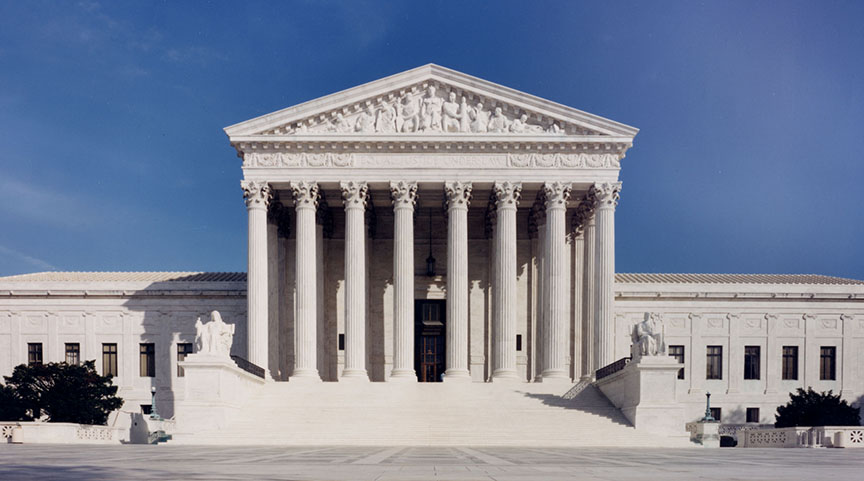
Justice Anthony Kennedy is stepping down from the U.S. Supreme Court. President Donald Trump is poised to appoint Justice Brett Kavanaugh who could tip the scales and possibly overturn Roe v. Wade, the 1973 decision that legalized abortion.
The pro-life crowd is excited about the possibilities--not only of overturning Roe v. Wade but an even more ambitious dream of a Constitutional amendment in their favor.
However, the single-minded determination of the pro-life movement to abolish legal abortion has blinded many to the complexities of the situation as well as other avenues of being pro-life. It is unlikely that overturning Roe v. Wade would deliver the results they anticipate.
I write as someone committed to protecting life from conception to natural death but standing outside the formal pro-life movement. Let's think through some likely scenarios:
What would happen if abortion were illegal?
First, abortion would not automatically become illegal nationally just with a Supreme Court ruling. That decision would go to each and every state. The issue would continue to be complex at both the federal and state levels, as this link details. A simple outcome is not realistic.
In states that criminalize abortion, women of means who want an abortion will simply travel to another state or country to have to procedure done. That would be fairly easy to do. It isn't the 1950s anymore--even global travel is relatively simple and inexpensive.
In addition, there will no doubt be an underground market of abortion providers for those of lesser means.
Despite that, making abortion illegal will almost certainly stop some abortions and save some lives--but only in the short run, in my opinion. I have doubts about whether that would be true in the long run.
A culture with illegal abortion would be a lot like the prohibition of alcohol in the 1930s. An illegal market would thrive and it would also come with other secondary negative consequences. When alcohol was illegal it created an environment that allowed mobsters like Al Capone to proliferate. It wasn't just the prohibition of alcohol itself but rather the whole underground culture that went along with it that was the problem. Something similar would probably happen if abortion were to be illegal again. The whole effort will so thoroughly hated by so many people that a Constitutional amendment will indeed come, but I predict it will be on the pro-choice side. In other words, legal abortion will return with a vengeance and it will be legally cemented more than ever before. The pro-life movement will be set back decades, if not permanently.
How do I know this? It's easy:
First, abortion would not automatically become illegal nationally just with a Supreme Court ruling. That decision would go to each and every state. The issue would continue to be complex at both the federal and state levels, as this link details. A simple outcome is not realistic.
In states that criminalize abortion, women of means who want an abortion will simply travel to another state or country to have to procedure done. That would be fairly easy to do. It isn't the 1950s anymore--even global travel is relatively simple and inexpensive.
In addition, there will no doubt be an underground market of abortion providers for those of lesser means.
Despite that, making abortion illegal will almost certainly stop some abortions and save some lives--but only in the short run, in my opinion. I have doubts about whether that would be true in the long run.
A culture with illegal abortion would be a lot like the prohibition of alcohol in the 1930s. An illegal market would thrive and it would also come with other secondary negative consequences. When alcohol was illegal it created an environment that allowed mobsters like Al Capone to proliferate. It wasn't just the prohibition of alcohol itself but rather the whole underground culture that went along with it that was the problem. Something similar would probably happen if abortion were to be illegal again. The whole effort will so thoroughly hated by so many people that a Constitutional amendment will indeed come, but I predict it will be on the pro-choice side. In other words, legal abortion will return with a vengeance and it will be legally cemented more than ever before. The pro-life movement will be set back decades, if not permanently.
How do I know this? It's easy:
I've done a lot of grassroots organizing. You always have to build a base before you attempt to pass a law. That's just Grassroots
Organizing 101. Otherwise, the law won't
be accepted by the people and passing it will just erode the credibility of our institutions (government, law enforcement, etc). Forcing a law upon people who clearly do not want that law will end in disaster.
A law will not stand unless the hearts and minds of the people have been opened to support it. After all, a law is only an attempt to codify the will of the people, especially in a representative democracy. Perhaps some obscure laws can be pushed through by a small group of determined activists unbeknownst to the rest of the population. But the issues around abortion impact so many people in such a visceral way that any laws around it must have the support of the people. That is simply not the case right now.
We know that over two-thirds of Americans favor some access to legal abortion. The pro-life movement need not despair, because those same polls also show that similar numbers want some limits on abortion. There is a lot of room for growth here, but the culture is not ready for a dramatic law reversal, yet. However, there are many life-saving things that can be done in the meantime.
Trying to force people to change their behavior by imposing a law on them is short-sighted and would only have limited success. You have to win the battle for the hearts and minds of the people.
A law will not stand unless the hearts and minds of the people have been opened to support it. After all, a law is only an attempt to codify the will of the people, especially in a representative democracy. Perhaps some obscure laws can be pushed through by a small group of determined activists unbeknownst to the rest of the population. But the issues around abortion impact so many people in such a visceral way that any laws around it must have the support of the people. That is simply not the case right now.
We know that over two-thirds of Americans favor some access to legal abortion. The pro-life movement need not despair, because those same polls also show that similar numbers want some limits on abortion. There is a lot of room for growth here, but the culture is not ready for a dramatic law reversal, yet. However, there are many life-saving things that can be done in the meantime.
Trying to force people to change their behavior by imposing a law on them is short-sighted and would only have limited success. You have to win the battle for the hearts and minds of the people.
Recommendations for the Pro-Life Movement:
In light of the above, here is a strategy I would recommend for the pro-life movement. None of this requires anyone to change their beliefs about abortion. It is simply a prescription for a different method of approaching the issue. This is not a "watered down" approach. In fact, I believe this may very well be more successful than current methods.
In light of the above, here is a strategy I would recommend for the pro-life movement. None of this requires anyone to change their beliefs about abortion. It is simply a prescription for a different method of approaching the issue. This is not a "watered down" approach. In fact, I believe this may very well be more successful than current methods.
1. Work to reduce the number of actual abortions by addressing the drivers. We know
what the drivers are. There are social factors--such as social stigma, shame, isolation and social pressure. There are also economic
factors, such as access to health care, job security, ample pay, reliability of child support, maternity/paternity leave, etc. We know we can
reduce abortions by directly impacting these factors. Let's do that. I even think both pro-choice and pro-life supporters could join together on this.
One example of a social factor: Much of Christianity may be staunchly anti-abortion, but it is also staunchly shame-based when it comes to a pregnancy that occurs outside of certain parameters (marriage, etc). It may preach an anti-abortion message from the pulpit and have some success convincing people. However, the fear of facing scorn and shame from family and community members may drive others to consider abortion, thereby neutralizing the pro-life preaching.
Economic factors: We know that there are legislative solutions that increase rights for parents in the workplace and a safety net for people who fall on hard times. Many women say they would not have chosen abortion if they didn't fear losing their ability to care for themselves and their families. They simply don't see a way forward. Can we help them?
One example of a social factor: Much of Christianity may be staunchly anti-abortion, but it is also staunchly shame-based when it comes to a pregnancy that occurs outside of certain parameters (marriage, etc). It may preach an anti-abortion message from the pulpit and have some success convincing people. However, the fear of facing scorn and shame from family and community members may drive others to consider abortion, thereby neutralizing the pro-life preaching.
Economic factors: We know that there are legislative solutions that increase rights for parents in the workplace and a safety net for people who fall on hard times. Many women say they would not have chosen abortion if they didn't fear losing their ability to care for themselves and their families. They simply don't see a way forward. Can we help them?
2. Build a grassroots support for a culture of life. The current pro-life movement is never going to do that. Admittedly, it has done the impossible: It has engineered a cultural stalemate. That's amazing given that many assumed the pro-life movement would have disappeared by now. However, it will never really "win" as it is now. But a holistic, consistent ethic of life approach can build the credibility the movement needs.
I know that sounds counter-intuitive, as it seems few Americans hold a truly consistent ethic of life, but it is the only position with sound theology--the individual wins when the community wins, and visa versa. Current ideological debates have the mother pitted against the unborn child in a zero-sum scenario. America is individualism on steroids, but one individual's freedom often impacts another individual's freedom. We have to be realistic about the limits of individualism and instead embrace a communitarian vision that seeks the common good. A new paradigm is needed, or perhaps an old one.
3. Limit legal interventions for now. The movement can spend some energy on legislative outcomes but should limit its focus on extreme cases for
now, such as late term abortions. You could argue that Roe v. Wade as it stands now allows for more abortions than most Americans would support, and that is a fair point. I'm not a big believer that we can address abortion legislatively, but if folks want to go that route, the key here is to only advocate for legislation when grassroots support has reached a critical mass.
4. Reconsider legislative approaches for the future. Once that grassroots culture of life from #2 above has been nurtured and grown, there may come a time in the future to introduce legislation around abortion once again. However, if the culture of life were really strong, a law might not even be needed.
Hypothetical question: Does it really mater if abortion is legal or not if no one has one? I get it that the laws on the books say something about who we are as a people and what we value, and some would argue that if something is legal there are people who will utilize that option. But there is no law preventing anyone from supporting and safeguarding life right here and right now.
Conclusion
4. Reconsider legislative approaches for the future. Once that grassroots culture of life from #2 above has been nurtured and grown, there may come a time in the future to introduce legislation around abortion once again. However, if the culture of life were really strong, a law might not even be needed.
Hypothetical question: Does it really mater if abortion is legal or not if no one has one? I get it that the laws on the books say something about who we are as a people and what we value, and some would argue that if something is legal there are people who will utilize that option. But there is no law preventing anyone from supporting and safeguarding life right here and right now.
Conclusion
Many in the pro-life movement have been so focused on trying to make abortion illegal that they have become blinded to these other realities. I am convinced that a law at this time would be mostly unsuccessful and certainly unsustainable in the long run. I am also doubtful that this is an issue that can be addressed primarily legislatively.
The focus on making abortion illegal while ignoring the
drivers just gives credence to the notion that the movement is more about
shaming women than saving lives. This is especially true when the politicians who want to make abortion illegal are the same ones who are likely to increase the factors the drive people to consider abortion in the first place--withdrawing economic safety nets and chipping away at workers rights, for example. This puts people into impossible situations while others sit back and judge if they make the "ethical" choice or not. It feels like watching
gladiators in the Roman coliseum. Let's not play games with lives! Instead, let's "create a society where it is easier to be good" (Peter
Maurin).
Further, the focus on making abortion illegal is a way, I believe, for the pro-life movement not to get its hands dirty. To create a culture of life would require ALL of us to change, not just "those people over there." Most of us find it easier to point fingers than do the interior work on ourselves. If the pro-life movement wants to be successful, the only path forward is to embrace a consistent ethic of life. It will require everyone's "all in."
Further, the focus on making abortion illegal is a way, I believe, for the pro-life movement not to get its hands dirty. To create a culture of life would require ALL of us to change, not just "those people over there." Most of us find it easier to point fingers than do the interior work on ourselves. If the pro-life movement wants to be successful, the only path forward is to embrace a consistent ethic of life. It will require everyone's "all in."

No comments:
Post a Comment